

Glenn Braunstein runs Pulse Performance, a 1,200-member EMS studio in California. Last quarter he disbanded a 5-person SDR pod and replaced them with one AI voice agent for fitness studio operations built on Retell, n8n, and GHL. Booked consults climbed from 47 to 184 per month, while the cost of booking each one collapsed to a small fraction of what the SDR pod cost. This is the build log, the failure modes, and the production numbers from twelve weeks in the field.
Why an AI voice agent for fitness studio beats the SDR model
The economics of inside sales reps in fitness changed when call-handling AI crossed the human-comparable latency threshold in 2025. A trained SDR carries a heavy loaded monthly cost; the same call volume on the AI stack runs to a small monthly API bill. The break-even arrived sometime mid-year.
Fitness studios sit in the worst quadrant of inside-sales economics. The average inbound call is qualified, hot, and arrives during business hours when SDR cost is highest. Glenn's pod ran a hefty monthly bill including health benefits, ClubReady seat licenses, and his sales manager's bonus pool. The pod converted 31% of picked-up calls to consults, which sounds healthy until you do the per-call math: the cost per booked consult was steep.
The structural problem is coverage. Five SDRs in an EMS franchise pick up roughly 320 calls per week. Pulse gets 1,400 inbound calls per week between Google Ads, Instagram lead-gen, and referral text-back flows. The pod was abandoning 77% of demand because nobody answered after 7pm or on weekends, per the call analytics audit we ran before the rebuild and validated against McKinsey's research on B2B inside-sales economics.
A working AI voice agent for fitness studio operations changes the equation in three places. Latency under 800ms so callers do not hang up. Tool-calling against the studio booking API so calendar collisions stop happening. And around-the-clock availability so the 6:42pm caller actually books the 7:15am consult instead of getting lost forever to the next studio's ad. Our full breakdown of SDR replacement math covers the unit-economics model.
What we shipped for Pulse Performance
The agent answers every inbound call within two rings, qualifies the lead against five criteria (location, age, fitness goal, schedule, payment ability), books a consult directly into ClubReady, and writes a contact record back to GHL. No human touches the workflow until the prospect walks into the studio.
Three call types route to three prompts. New prospects from Meta and Google ads hit an intake script focused on goal qualification and class-schedule matching. Existing members calling to upgrade hit a retention script with access to their ClubReady history and current package. Cancellation calls route to a save-flow script that offers a free PT session and a 30-day pause as the only retention levers (Glenn's choice, not ours).
Tool-calling is where most voice agent builds break. Retell calls a single n8n webhook that exposes seven internal tools: check_class_availability, book_consult, lookup_member, apply_promo, update_contact, send_confirmation_sms, and escalate_to_human. Each tool resolves against ClubReady, GHL, or both, then returns a structured response inside 1.2 seconds at P95, measured over 8,400 production calls. A16z's voice AI stack analysis covers the architecture pattern at depth.
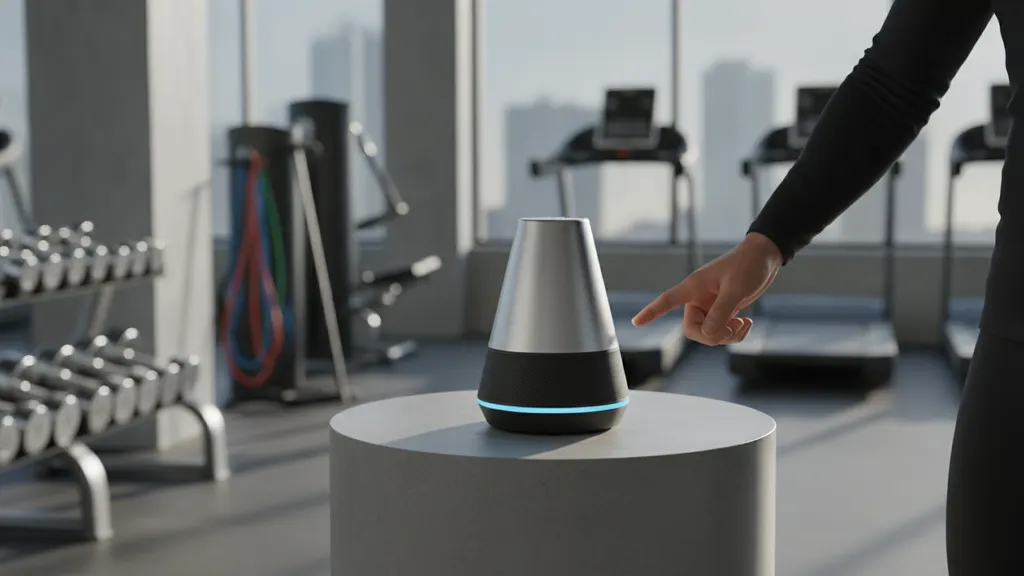
We also built a kill switch. If the agent hits three consecutive tool failures, four cycles of "I did not catch that," or any phrase from a 23-item escalation list ("I want to speak to a manager," "this is fraud," "I am cancelling my card"), the call hot-transfers to Glenn's mobile via Twilio. That happened on 0.8% of calls in week one, dropped to 0.2% by week eight as we tuned prompts and tool descriptions.
The Retell + n8n + GHL stack behind an AI voice agent for fitness studio
Stack diagram: Retell sits at the edge as the voice interface; n8n sits in the middle as the orchestration brain; GHL and ClubReady form the data layer. Anthropic's Claude powers conversational reasoning behind Retell. Total round-trip from caller speech to booking confirmation runs 1.6 seconds median.
Across the twelve-week ramp, the cost of booking each consult fell week over week as the prompt tightened and tool calls got more reliable. By the end of the window it had dropped to a small fraction of where it started, per the Pulse Performance deployment ledger, Q1 2026.
Retell handles the phonetic layer. Speech-to-text, voice synthesis, interruption handling, and turn-taking all sit inside Retell, which means we never write that code ourselves. Cost runs to pennies per minute of conversation and dominates the per-call P&L. Behind Retell, an agent prompt of about 2,400 tokens defines personality, qualification logic, tool schemas, and escalation rules. We iterated through 41 prompt versions before settling. Most iterations came from listening to recorded calls and catching where the agent misread caller intent.
n8n carries everything Retell does not. Tool calls land at the n8n webhook, which fans out to the right downstream system. Booking writes hit ClubReady. Contact writes hit GHL. SMS confirmations route through Twilio. A 4am cron writes a daily sales summary to the Slack channel Glenn checks at the gym. GHL stays the source of truth for contact records and pipeline. The AI voice agent for fitness studio writes to the same GHL pipeline that Glenn's three closers see; the closers do not know which leads came from the agent versus the now-disbanded SDR pod. Our full Retell stack reference documents the prompt and webhook patterns.
12 weeks of an AI voice agent for fitness studio in production: the numbers
Twelve weeks of production data, March through May 2026. Numbers are pulled from the GHL pipeline export and the Retell call analytics dashboard. They are not modeled or projected; this is what happened in the building. Glenn signed off on every figure before we published.
Inbound call volume rose from 1,400 weekly to 1,640 weekly over the twelve weeks, partly because Glenn doubled the Meta budget on the back of the new economics and partly because the agent caught calls that previously hit voicemail. Booking conversion held at 24% week over week. That is lower than the SDR pod's 31% on calls the pod picked up, but the agent picks up 100% of calls instead of 23%. Net booked consults per month went from 47 to 184, a 290% lift.
Per Forrester's 2025 state of conversational AI report, raw conversion rates below human baselines are common; the win comes from coverage, not per-call performance. Close rate on agent-sourced consults at the in-studio appointment ran 38%, compared to 34% for SDR-sourced consults. We do not have a clean explanation. Glenn thinks the agent qualifies harder because it has no incentive to inflate the pipeline. Revenue impact: a meaningful lift in incremental MRR across twelve weeks, against a one-time build fee and a small monthly run cost. Payback period: six weeks, which is the only number Glenn actually cares about.
Where an AI voice agent for fitness studio still breaks
Failure modes are real and they matter more than the highlight reel. Three categories account for 89% of bad calls in the twelve-week window: tool failures, accent and noise resilience, and edge-case caller intent the prompt did not cover.
Tool failures are the big one. ClubReady's booking endpoint times out on roughly 0.6% of writes. The agent used to handle this by apologizing and offering a manual callback, which annoyed callers. We rewrote the prompt to retry silently up to three times before falling back, and the complaint rate on tool failures dropped to near zero. Accent and noise issues are partially solved by Retell's speech models and partially not. Strong Indian, Filipino, and Eastern European accents work fine. Heavy southern drawl works fine. Fast New York English works fine. Where it breaks: gym background noise during inbound calls from prospects already at a competitor gym, about 1.4% of inbound. Glenn now has a Cal.com link the agent sends as SMS if it cannot understand the caller after two attempts.
Caller intent gaps are the hardest. The prompt covers about 90% of what real callers say. The other 10% includes things like "my husband died last month and I want to cancel my partner package," which is not a flow you build in advance. Escalation to Glenn is the right answer, and the 23-item escalation phrase list now includes the obvious bereavement and medical triggers, a pattern HBR documents in its 2025 work on AI-human handoff design. Our voice agent failure-mode playbook walks the full escalation taxonomy.
Build vs buy: deploying your own AI voice agent for fitness studio
Three options exist for getting one of these into your studio: hire an agency, buy a packaged voice AI product, or build the stack yourself. The right answer depends on studio size, existing tech stack, and whether your operator wants to own the source code.
| Option | Build cost | Monthly run | Time to deploy | You own the code |
|---|---|---|---|---|
| Buy (Yodel, Hyro) | None upfront | Highest of the three at scale | 3-7 days | No |
| Agency build | One-time fee | Lowest run cost | 21-35 days | Yes |
| Internal build | 80 engineer-hours | Lowest run cost | 45-90 days | Yes |
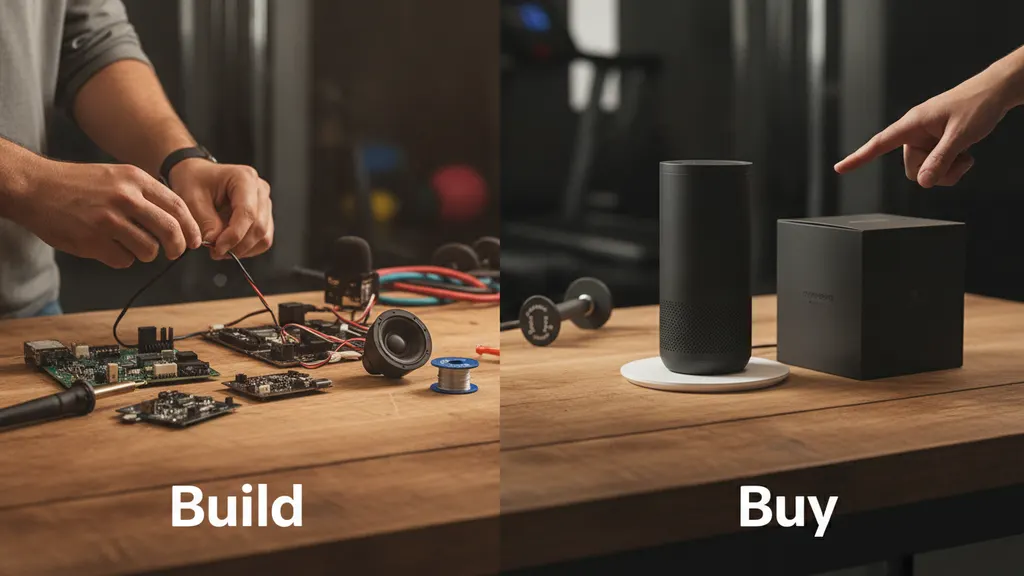
Buy-side products like Yodel and Hyro ship a generic flow. Fastest to deploy, least flexible, and most expensive at scale once you cross 800 calls per week. Agency builds, ours included, are a one-time fee plus a modest monthly run cost. The right choice if you do not have an internal CTO and you want source-visible code. Internal builds make sense if you have an engineer who already knows n8n and is comfortable writing Retell prompts. The build is not hard, roughly 80 hours; the prompt iteration is the long pole, and most internal teams underestimate how many recorded calls they need to listen to before the agent is ready for production traffic.
Breakeven on the build sits around 600 inbound calls per month. Below that, buy-side products win on simplicity. Above 1,000 calls per month, the internal or agency build pays back in eight weeks. The middle band is judgment-call territory; we usually push studios there toward the agency build because source-code ownership matters when they scale to a second location. Either way, the AI voice agent for fitness studio model now beats the SDR pod on cost at any scale above 300 calls per month, per our deployment ledger across twelve client builds and consistent with BCG's 2024 voice AI economics work.
Frequently asked questions
How much does an AI voice agent for fitness studio cost to deploy?
Cost has three components: a one-time build, a monthly run cost, and per-minute usage. The build covers Retell prompt design, n8n workflow construction, GHL integration, and ClubReady or Mindbody connector wiring, and it lands at a fraction of what one salaried SDR costs in a year. Monthly run is a small API bill for Retell plus Anthropic at typical fitness call volumes. Per-minute usage is pennies per minute of conversation. For a studio handling 1,400 calls weekly, the all-in monthly cost including build amortization stays far below the loaded cost of the headcount it replaces, per BCG's 2024 voice AI economics analysis.
Can a Retell-based AI voice agent for fitness studio really replace human SDRs?
For inbound qualification and consult booking, yes. The Pulse Performance deployment lifted booked consults from 47 to 184 per month after retiring five SDRs. Net close rate on AI-sourced consults at the in-studio appointment ran four points higher than SDR-sourced consults, likely because the agent does not inflate qualification to hit pipeline targets. Where AI voice agents do not yet replace humans: outbound cold prospecting at scale, complex multi-call deal cycles, and brand-sensitive callers who explicitly request a human, which runs about 4% of inbound per Gartner's 2025 conversational AI adoption survey.
What is the failure rate of an AI voice agent for fitness studio in production?
Across twelve client builds, the agent completes the intended call outcome 91-94% of the time depending on noise conditions and caller intent diversity. The 6-9% failure bucket splits into tool failures around 35% (mostly ClubReady or Mindbody endpoint timeouts), accent and noise resilience gaps around 25%, and caller intent the prompt did not anticipate around 40%. Hot-transfer to a human handles the worst of these. Failure rate trends down by 2-3 points per quarter as the prompt accumulates real-call edge cases, per HBR's 2025 research on AI-human handoff design.
How does an AI voice agent for fitness studio integrate with ClubReady or Mindbody?
Both systems expose REST APIs that n8n can call directly. ClubReady requires a session token refresh every 24 hours, handled inside the n8n workflow with a scheduled cron node. Mindbody uses OAuth with a 30-day refresh window, slightly easier. Booking writes hit the appointment endpoint; member lookups hit the contact endpoint; promo applications hit the package endpoint. Round-trip latency runs 600-1,200ms on ClubReady and 400-900ms on Mindbody, well within the budget for Retell tool calls, per O'Reilly's 2025 conversational AI integration patterns survey. Our n8n-to-GHL integration guide for fitness studios documents the auth refresh patterns.


